

850 Division Road, Windsor, ON, Canada 🍁 N8W 5R9
+1(519) 981-9111
info@greatlakestds.ca
9:00 AM to 5:00 PM
REGISTER NOW

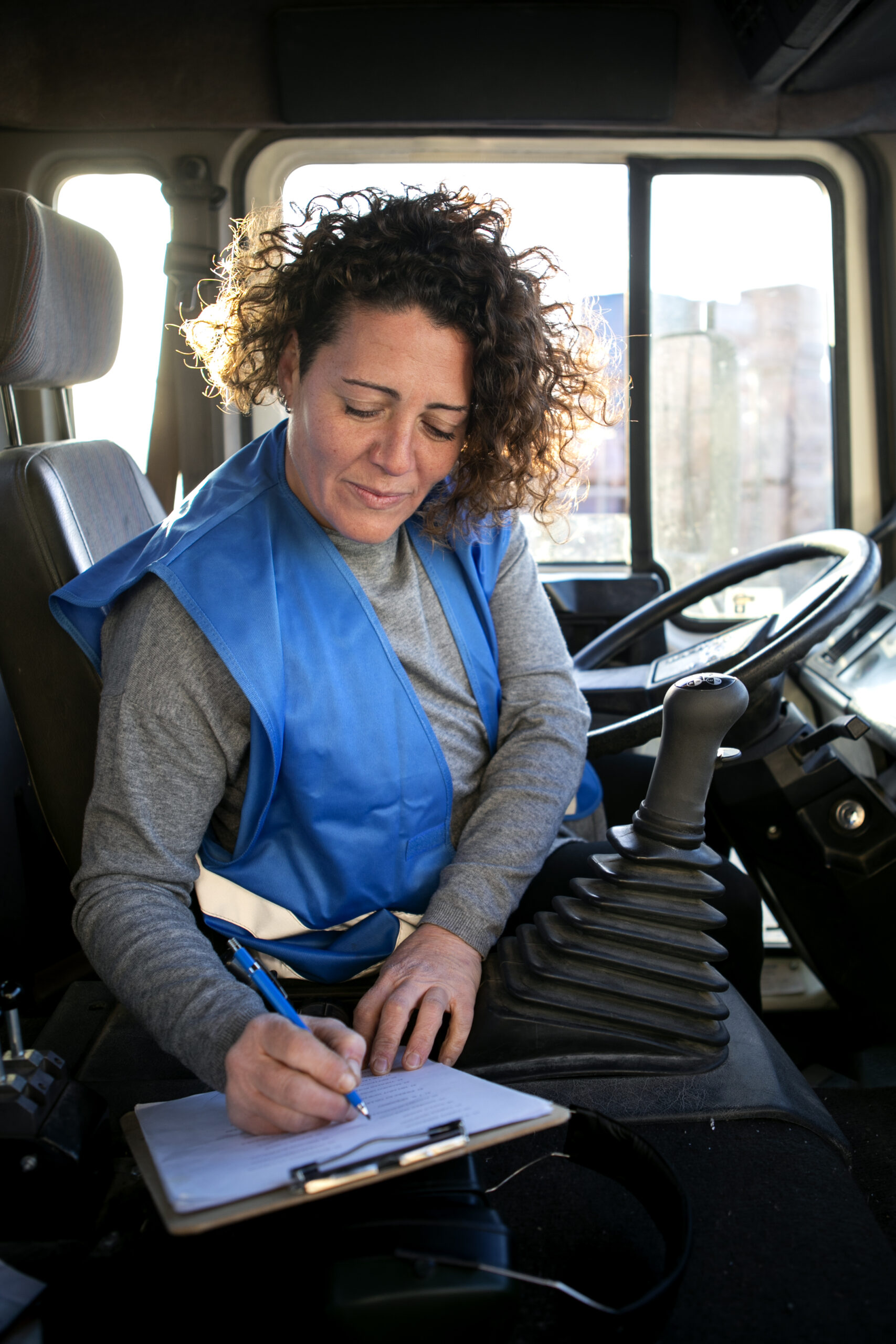
Student completing AZ truck driver training in Ontario at a driving school.

How Long Does It Take to Get a Truck License in Ontario?

If you’re thinking about becoming a commercial truck driver in Ontario, one of the first questions you’ll ask is:

“How long does it actually take to get my truck license?”

The short answer is:
Anywhere from 3–6 weeks on a fast-track schedule, or up to 2–3 months on a part-time schedule — depending on the licence type, your availability, testing wait times, and how well prepared you are.

Also, look at what licence you need to become a truck driver in Ontario.

At Great Lakes Truck Driving School, we guide students through this process every week. In this guide, we’ll walk you through:

  • The exact timeline for each licence type
  • What delays most students
  • Real-world case study examples
  • How to finish as fast as possible (without cutting corners)

Step 1: Choose the Right Truck Licence in Ontario

Your timeline depends heavily on which licence you’re going for:

Class A (AZ) Licence

For tractor-trailers and transport trucks with air brakes.

  • Required training: Mandatory Entry-Level Training (MELT)
  • Most common career path
  • Longest training time

Class D / DZ Licence

For straight trucks, dump trucks, garbage trucks, and delivery vehicles.

  • Shorter training
  • Great for local commercial driving jobs

Each class has its own testing and training requirements, which directly affects how long it takes.

Step 2: Medical Exam & Written Knowledge Test (1–3 Days)

Before you can touch a truck, you must:

  • Complete a commercial medical exam
  • Pass a vision test
  • Pass a written knowledge test

The written test itself only takes about 30 minutes
Many students complete this entire step in 1–3 business days

This step is often the fastest part of the process if you are prepared.

Step 3: Truck Driver Training Program Timeline

Now comes the hands-on training — where most of your time is spent.

Class A (AZ) Training – Full-Time

  • Typical duration: 3–5 weeks
  • Includes:
    • Classroom theory
    • Yard skills
    • Road driving
    • Coupling/uncoupling
    • Air brake systems
    • Highway driving

DZ / Class D Training

  • Typical duration: 1–3 weeks
  • Focused on:
    • Straight truck handling
    • Load securing
    • City & highway driving
    • Air brakes (if applicable)

Students who train full-time finish much faster than those attending part-time.

Step 4: Booking & Completing the Road Test (1–3 Weeks)

Once training is complete, you must pass your DriveTest road exam.

Here’s where delays can happen:

  • Test availability varies by city and season
  • Busy locations may have 1–3 week wait times
  • If a student fails, Ontario requires:
    • A 10-day minimum wait before retesting

Students who come prepared often pass on the first attempt.

Realistic Case Study Timelines

Here are real-world examples based on how long students typically take:

Case Study #1: Fast-Track Full-Time AZ Student (4–5 Weeks)

  • Week 1: Medical + written test passed
  • Weeks 2–4: Full-time truck training
  • Week 5: Road test booked & passed
  • Total Time: About 4–5 weeks

This is the fastest realistic scenario for a motivated student.

Case Study #2: Part-Time AZ Student (8–10 Weeks)

  • Week 1: Medical + written test
  • Weeks 2–7: Part-time training
  • Weeks 8–9: Road test booking & test
  • Total Time: Around 2 months

Case Study #3: DZ Truck License Student (3–4 Weeks)

  • Week 1: Medical + knowledge test
  • Weeks 2–3: Training
  • Week 4: Road test
  • Total Time: Around 3–4 weeks

Average Time to Get a Truck License in Ontario

Licence Type

Fast Track

Average Timeline

AZ / Class A

4–6 weeks

2–3 months

DZ / Class D

3–4 weeks

1–2 months


What Can Slow Down Your Licensing Process?

These are the most common delays we see:

  • Waiting too long for your medical appointment
  • Failing the written knowledge test
  • Choosing part-time training
  • Road test backlog
  • Needing to retest after a failure

The more prepared you are on day one, the faster you finish.

How to Get Your Truck Licence Faster in Ontario

If speed matters to you, here’s how to move fast:

Book your medical exam immediately
Study for the written test before applying
Choose full-time training if possible
Train with professionals who prepare you for first-try road test success
Be flexible with road test locations if needed

Final Answer: So… How Long Does It Take?

In most real-world situations:

  • AZ Licence: 4–8 weeks on average
  • DZ Licence: 3–6 weeks on average

Some students finish faster. Others take longer due to scheduling or retesting. But with proper training and preparation, Ontario’s truck licensing system is very achievable within 1–2 months.

Ready to Start Your Truck Driving Career?

At Great Lakes Truck Driving School, we help students move from zero experience to licensed professional drivers as quickly and safely as possible.

Whether you’re going for your AZ or DZ licence, we guide you through:

  • Medical & written test prep
  • Professional hands-on driving training
  • Road-test readiness
  • Job-ready real-world skills

Contact us today to get started on your truck driving career in Ontario.

A student truck driver in training with an instructor, ideally in a classroom or behind the wheel.

Top 5 Mistakes New Truck Driver Students Make — and How to Avoid Them

Starting a career as a professional truck driver is exciting, but it can also be overwhelming for new students. At Great Lakes Truck Driving School (TDS) in Windsor, Ontario, we’ve trained hundreds of drivers for success. Over the years, we’ve noticed common mistakes that new truck driver students make — and we want to help you avoid them.

Whether you’re pursuing your AZ licence in Ontario or just starting truck driver training, understanding these pitfalls will set you up for success.

1. Skipping Classroom Lessons or Not Paying Attention

Many students think that hands-on driving practice is the only important part of learning. However, the classroom lessons cover essential topics like road safety, Ontario trucking laws, cargo security, and route planning.

Tip to Avoid: Treat every classroom session seriously. Take notes, ask questions, and review material daily. This knowledge will make your truck driving tests in Ontario easier and improve your real-world driving skills.

2. Underestimating the Importance of Practice

Driving a tractor-trailer is very different from driving a regular car. Some students underestimate the time and focus required to master maneuvering, backing up, and parking large trucks.

Tip to Avoid: Practice as much as possible with your instructor. Use every driving session to focus on control, speed, and safety. Remember: truck driving school Windsor provides structured practice to help you succeed.

3. Not Preparing for the AZ Licence Test

Some students assume that passing the AZ licence test is easy. In reality, the test evaluates your driving skills, knowledge of Ontario road laws, and ability to handle a commercial vehicle safely.

Tip to Avoid: Study the Ontario Ministry of Transportation truck licence guidelines, review your classroom notes, and do mock tests if possible. Preparation is key to passing your AZ licence the first time.

4. Ignoring Health and Safety Tips

Truck driving requires long hours behind the wheel, proper posture, and attention to fatigue. Many new drivers neglect health and safety practices, leading to poor performance and even accidents.

Tip to Avoid: Get enough rest, stay hydrated, and follow your instructor’s advice on safe driving habits. Learning good habits early will benefit your truck driver career in Ontario for years to come.

5. Not Asking for Help or Feedback

It’s common for new students to feel intimidated or embarrassed to ask questions. However, avoiding guidance from your instructor can slow your learning and lead to repeated mistakes.

Tip to Avoid: Always ask questions, request feedback, and clarify doubts. Your instructors at Great Lakes TDS are there to ensure you gain confidence and master the skills needed for your AZ licence in Ontario.

Conclusion

Starting your truck driving training in Windsor, Ontario doesn’t have to be stressful. By avoiding these common mistakes new truck driver students make, you’ll be better prepared for your AZ licence and your career as a professional truck driver.

Remember: attending a registered truck driving school like Great Lakes TDS ensures you get the guidance, practice, and support you need to succeed.

Ready to start your journey? 👉🏼 Enroll in our AZ Licence Training Program Today and take the first step toward a rewarding career in trucking.

Why Choose Great Lakes Truck Driving School Inc. (Windsor, ON)

Windsor runs on wheels. Between the Ambassador Bridge, the auto plants, and the constant flow along the 401 and E.C. Row, this city is built on logistics. If you’re serious about a stable, high-responsibility career that actually moves something, you need training that’s local, practical, and respected by carriers. That’s where we come in.

Great Lakes Truck Driving School Inc. — Windsor, ON
850 Division Road, Windsor, ON N8W 5R9
📞 519-981-9111 | ✉️ info@greatlakestds.ca

A school with one focus: turn new drivers into safe, hireable professionals

Our training is built around three promises:

  1. Safety first, always. You’ll master Ontario’s Schedule 1 daily inspection, air-brake checks, winter driving fundamentals, and defensive driving.
  2. Skills that hold up at 3 a.m. in February (worst-case conditions). Backing, coupling/uncoupling, lane control, space and speed management, city and highway routines.
  3. Professionalism carriers notice. Hours-of-Service and ELD use, basic cargo securement concepts, trip planning, border basics, yard etiquette, and paperwork discipline.

What makes us different in Windsor

  • Border-city advantage
    Train minutes from the Windsor-Detroit crossings and real carrier yards. You’ll practice the same traffic patterns, weather, and routing you’ll face on the job.
  • MELT done right
    Ontario’s Mandatory Entry-Level Training is the baseline. We teach it thoroughly, with extra reps where new drivers struggle most: mirror usage, trailer off-tracking, and precision backing.
  • Low student-to-truck time
    You can’t learn tractor-trailer control from the passenger seat. We prioritize actual wheel time and structured yard practice.
  • Road-test preparation on Windsor routes
    Mock tests on realistic routes so test day feels familiar.
  • Instructor bench you can trust
    Experienced drivers who’ve hauled in real conditions, not just read about them.
  • Career support that respects your time
    Resume polishing for entry-level roles, interview prep, employer info sessions, and references when you earn them. No gimmicks, no “guaranteed job” hype.
  • Transparent, professional culture
    Clear expectations, safety standards, and honest feedback. If something isn’t test-ready, we tell you and help you fix it.

Program at a glance (Class A)

  • Eligibility: 18+, full Class G, vision/knowledge tests, commercial medical as required.
  • Training: MELT curriculum with classroom, yard, and in-cab instruction.
  • Air-brake (Z) endorsement: Instruction and practical checks.
  • Inspections: Full Schedule 1 pre-trip and in-cab routines, major vs minor defects.
  • Vehicle control: Turns, shifting or automatic operation, hazard scanning, space management.
  • Backing: Straight, offset, alley dock, setup discipline.
  • Coupling/uncoupling: Fifth wheel, lines, visual verification, safe sequences.
  • Compliance: Hours-of-Service, ELD basics, weights and dimensions, basic cargo securement concepts.
  • Test prep: Targeted correction and mock road tests.

Thinking Class D (straight truck)? We also train straight-truck skills and road-test prep. Ask our team which pathway fits your goals.

Outcomes that actually matter

  • Confidence doing the hard things well
    Precision backing, controlled turns without curb strikes, clean coupling, and disciplined inspections.
  • Fewer rookie mistakes
    We drill mirror timing, trailer tracking, and low-speed control so you don’t learn “the expensive way.”
  • Professional habits
    Accurate logs, clean defect reporting, and reliable trip planning that dispatch can count on.

Who we’re a great fit for

  • New Canadians and career changers who want a proven path into a regulated, in-demand trade.
  • Detail-oriented learners who want clear checklists, repeatable routines, and honest coaching.
  • Serious beginners who want the right habits from day one, not shortcuts.

What graduates say (real themes we hear)

“I stopped guessing. The pre-trip sequence and backing setups are locked in.”
“Mock tests made the real test feel normal, not scary.”
“They didn’t sugar-coat anything. I knew exactly what to fix and how.”

Admissions: simple and clear

  1. Talk to us: 519-981-9111 or info@greatlakestds.ca
  2. Visit the yard: see the equipment, meet instructors, get timelines.
  3. Confirm eligibility: 18+, full G, knowledge/vision tests, medical as required.
  4. Enroll: Class A MELT or Class D pathway.
  5. Train and test: structured plan to your road test, with targeted practice.

Why now, why here

Windsor isn’t a place where trucks are occasional visitors. They are the lifeblood of work here. If you want a career that rewards discipline, calm under pressure, and real skill, start where those habits are taught with respect and precision.

Great Lakes Truck Driving School Inc. — Windsor, ON
850 Division Road, Windsor, ON N8W 5R9
📞 519-981-9111 | ✉️ info@greatlakestds.ca

Train with us. Test with confidence. Drive with pride.

Reasons to Get Enrolled in a Truck Driving School

Starting a career in trucking is a big step. A reputable, MTO-approved truck driving school helps you meet legal requirements, build real driving skill, and become job-ready without guesswork.

Why a school matters

  • It’s the legal path for Class A.
    Ontario requires Mandatory Entry-Level Training (MELT) before you can book a Class A road test. Approved schools deliver the MELT curriculum and issue the certificate the MTO needs.
  • Structured training that builds real skill.
    Professional instruction shortens the learning curve on shifting, braking, space management, backing, cornering, coupling/uncoupling, and winter driving techniques.
  • Safety and compliance from day one.
    You learn Schedule 1 daily inspections, air-brake (Z) endorsement, hours-of-service/ELD, cargo securement basics, and incident reporting so you start work compliant.
  • Road-test preparation on proper equipment.
    Schools provide tractor-trailers and training yards so you can practice backing, alley docks, offsets, serpentine, and coupling in a controlled environment before test day.
  • Employer and insurer credibility.
    Graduating from an approved program signals to carriers and their insurers that you’ve met provincial standards and had supervised seat time, which can improve hiring chances.
  • Faster transition to work.
    Quality schools offer resume help, interview prep, and introductions to hiring carriers. No school can guarantee a job, but good training makes you competitive.

What you will typically learn

  • Mandatory Entry-Level Training (MELT): minimum 103.5 hours total (in-class, yard, in-cab).
  • Vehicle inspections: full Schedule 1 pre-trip, in-cab, and air system checks.
  • Air-brake (Z) endorsement: operation, checks, and defects.
  • Vehicle control: turns, lane positioning, speed management, shifting or auto-transmission operation.
  • Backing and manoeuvres: straight-line, offset, alley dock, coupling/uncoupling.
  • Defensive driving: hazard perception, following distance, winter and mountain basics.
  • Regulatory compliance: hours-of-service, ELD use, cargo securement basics, weights and dimensions.
  • Professionalism: trip planning, paperwork, border basics if applicable, communication with dispatch and shippers/receivers.

Honest expectations

  • Jobs are in demand, not automatic.
    Hiring depends on your licence class (A or D), driving record, right to work, and fit with the carrier’s routes. Training improves your chances; it doesn’t guarantee placement.
  • Safety first, always.
    If you find a major defect during inspection, the vehicle is out of service until repaired. Schools should teach a safety-over-schedule mindset.

How to choose the right school

  • MTO-approved for MELT and Z endorsement.
  • Equipment similar to what you will test and work on.
  • Instructor-to-student ratio that allows real driving time.
  • Documented in-cab hours (not just observation).
  • Transparent road-test booking and retest policy.
  • Employer connections and resume/interview support.
  • Clean safety culture: PPE, defect reporting, yard rules.

Getting started

  1. Confirm you meet the basics: 18+ with a full G licence and a valid medical for commercial driving.
  2. Enrol in an MTO-approved MELT program for Class A (or a Class D program if you’re targeting straight trucks).
  3. Pass the knowledge and vision tests.
  4. Complete training and pass your road test.
  5. Add Z endorsement if your vehicle has air brakes (most do).
  6. Apply with carriers; obtain TDG training from your employer if transporting dangerous goods.

A good school does more than help you pass a test. It builds safe habits, compliance knowledge, and confidence so you can start your trucking career the right way.